The problem
Flying in the flatlands requires towing. Unfortunately, towing adds a lot of logistics, a dedicated tow vehicle, a tow operator, a driver, and an expensive payout tow winch.
The Goal
soloTow is a DIY attempt to make towing more portable and convenient. It is not automatic, beginner-proof, or a commercial tow system. The goal is a portable winch that gives a current, capable pilot more independence at a reasonable cost.
- Easy to source aluminum extrusion frame.
- 3D printed pieces for small mounts and hand remote.
- Off the shelf drive, battery, controller
- Remote control with two way telemetry.
Why not pay out towing?
soloTow is a pay-in towing system. The line is pull out of the winch on the ground. The pilot is towed aloft by the line being pulled back onto the winch drum. The failures modes for pay-in towing are more forgiving vs pay out towing. If the winch or controller experience a malfunction, line tension tends to fall off instead of staying loaded.
That does not make towing safe. It just means a malfunction at the winch is more likely to become a normal landing. For this project, that was a better default than a payout setup.
System architecture
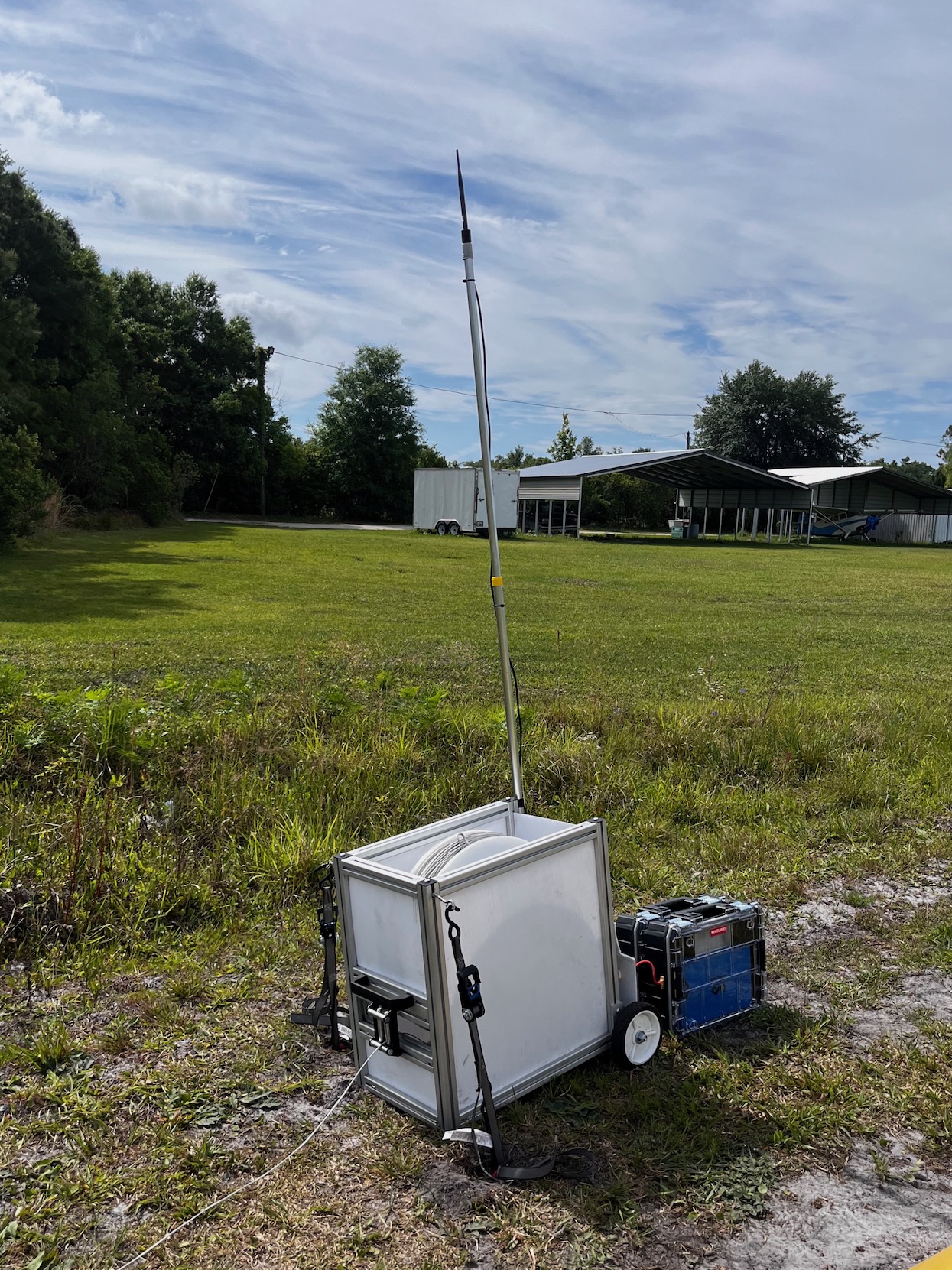
The drive side is a hub motor controlled by a Kelly motor controller, mounted into an aluminum extrusion frame with the tow drum and line. An extendable antenna mast is used to improve remote reception. The remote side uses a small LoRa radio development board to send commands from the pilot back to the winch. The winch also provides telemetry back to the pilot. Line Tension, auto rewind, battery, and signal strength displayed via a small OLED display
The Remote
The remote has a deadman switch. The controller also times out if it stops hearing from the remote, so the winch is not allowed to keep acting on stale commands or missing heartbeat packets. At launch, the pilot is at ground level and up to a kilometer away from the controller. This is the worst case RF scenario for the system, unfortunately, it is also one of the worst times to lose command authority. Initially it was found that clothing or harness could block the signal. Using high quality antennas, and raising the receiver antenna increased the signal strength enough for a reliable RF link.
What I would improve next
The radio link is the first thing I would improve. A relay radio station placed closer to the pilot would keep a cleaner link between the pilot and winch, especially when the pilot is low, far away, or partially blocked by gear.
The other obvious improvement is weight. The current motor works, but a smaller motor would make the whole system easier to setup and transport.
Results
The current system is fully functional. It has completed 60 successful tows, with an average tow altitude around 650 ft. I'm actively working version 2 incorporating the improvements listed above.
Safety note
Paragliding and towing are dangerous. This is not for inexperienced pilots, club or commercial towing, or anyone trying to skip proper instruction and judgment.